
With the release of NFPA 1010, a new foundation was set for firefighter qualifications—and with it came JPR 6.3.21: a requirement for Firefighter I candidates to demonstrate gas detection skills using a meter. NFPA 1010 includes recognizing alarms, monitoring the atmosphere, and verbalizing appropriate actions.
It’s a necessary update. But to truly prepare responders, we can’t stop at the minimum.
Why Realistic, Hands-On Training Matters
In a field where the margin for error is razor-thin, we know that training retention directly impacts performance in real-world scenarios. Research by Dr. R. Sarpy and Dr. M.J. Burke found that in dangerous work environments, “learning is more likely to transfer to the job when training includes active, behavioral engagement with realistic tools and scenarios.”
But, if we want firefighters to perform under stress, we must train them under conditions that reflect that reality.
Without a simulator like HazSim, gas detection training is often reduced to scripted scenarios and “pretend” readings. Firefighters are told what their meters would say and then asked to describe what they would do. There’s no actual reading, no real decision-making, no accountability—just role-play.
That kind of training doesn’t stick—and it doesn’t build confidence.
Simulation Bridges the Gap
HazSim provides the missing piece: realistic gas detection training without the risk. With handheld, LTE-enabled devices that simulate live gas readings and alarms, firefighters gain experience reading, reacting, and responding—just like they would on an actual call.
🔥 It reinforces critical thinking.
🔥 It increases engagement.
🔥 And most importantly, it builds competence through repetition.
A Real-World Example
Organizations like E-Med Training Services are already using HazSim to elevate their programs. As J. Travis Carricato, retired Operations Division Chief for Columbia Fire Department, explains:
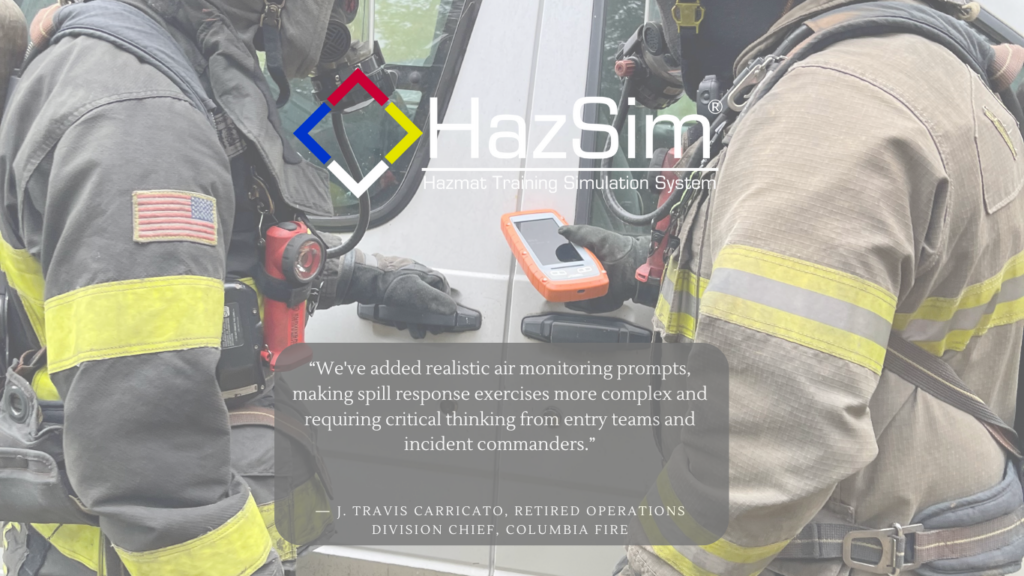
“Before we acquired the HazSim Pro3, our air monitoring capabilities were limited. We’ve added realistic air monitoring prompts, making spill response exercises more complex and requiring critical thinking from entry teams and incident commanders.”
It isn’t just about meeting a new standard. It’s about preparing firefighters for the situations they’re most likely to encounter—and giving them the tools to succeed.
The Bottom Line
Suppose your firefighters carry gas meters but still pretend to read during drills. In that case, you’re not training to today’s standard and missing a major opportunity to improve safety, performance, and retention.
NFPA 1010 sets the floor. Simulation helps you build everything above it.
Give your team the kind of training that lasts.
Train how you respond.