
By Phil Ambrose | Founder, HazSim | Battalion Chief (Ret.)
Last week I told you why I built HazSim — because I watched a generation of firefighters get handed four-gas meters and zero reps. The standard finally caught up. NFPA 1010 says it out loud now: JPR 6.3.21 — Operate an air-monitoring instrument — is a Firefighter I qualification. Every firefighter. Documented competency. Not awareness. Not a sign-in sheet.
So this week the question on every training officer’s desk is the same one: What do I do Monday morning?
This is the playbook.
Step 1: Stop confusing exposure with competency
Almost every department I walk into has a “gas monitoring training” already on the books. It usually looks like this: an instructor holds up a meter at the front of a classroom, the firefighters watch, somebody passes the meter around the room, the AC goes through its sensor names, and a sign-in sheet gets signed.
That training does not satisfy 6.3.21. It satisfies an audit only until the auditor asks for the second part of the sentence: demonstrate competency.
Competency means the firefighter holds the meter, encounters a changing atmosphere, makes a decision, and the consequence of that decision shows up in the readings on their device. If your current training does not put a meter in every firefighter’s hand and force a decision, you are not training to 1010. You are training to the AC’s PowerPoint.
Step 2: Inventory what you actually have
Before you fix anything, count what you own. Most departments are surprised by what they find.
Three columns on a whiteboard: Meters in service. Meters in cabinets. Meters that nobody on shift can confidently bump-test. That third column is the gap. It is also a real liability conversation, because every meter in service requires both a competent operator and a documented training record.
You don’t need new equipment for this step. You need an honest count and an honest conversation. Most departments find they have plenty of meters. What they don’t have is plenty of reps.
Step 3: Build the scenario library, not the slide deck
The NFPA 1010 evaluator is not going to ask your firefighter to recite the sensor types. The evaluator is going to put a meter in their hand, run them through a scenario, and ask them to interpret what they see and act on it.
So your scenario library matters more than your slide deck. At minimum, every Firefighter I in your department needs to demonstrate competency on:
- A confined space entry where O₂ is decreasing on entry and the right action is to back out
- A residential gas leak where LEL climbs as the firefighter approaches the source
- A hazmat unknown where multiple sensors trip and the firefighter must isolate which one drives the decision
- A post-fire overhaul where CO is the concern and ventilation changes the readings
- A “nothing’s wrong” scenario where the readings stay clean and the firefighter has to decide that the call really is what dispatch said it was
Every one of these scenarios needs to run with a real meter in the hand and atmospheric readings that change based on what the firefighter does. If the readings don’t change, the scenario isn’t a scenario. It’s a script.
Step 4: Train every shift, not every year
The “annual refresher” model is dead under 6.3.21. You cannot document competency for every firefighter in every shift on every meter using a once-a-year session. The math doesn’t work.
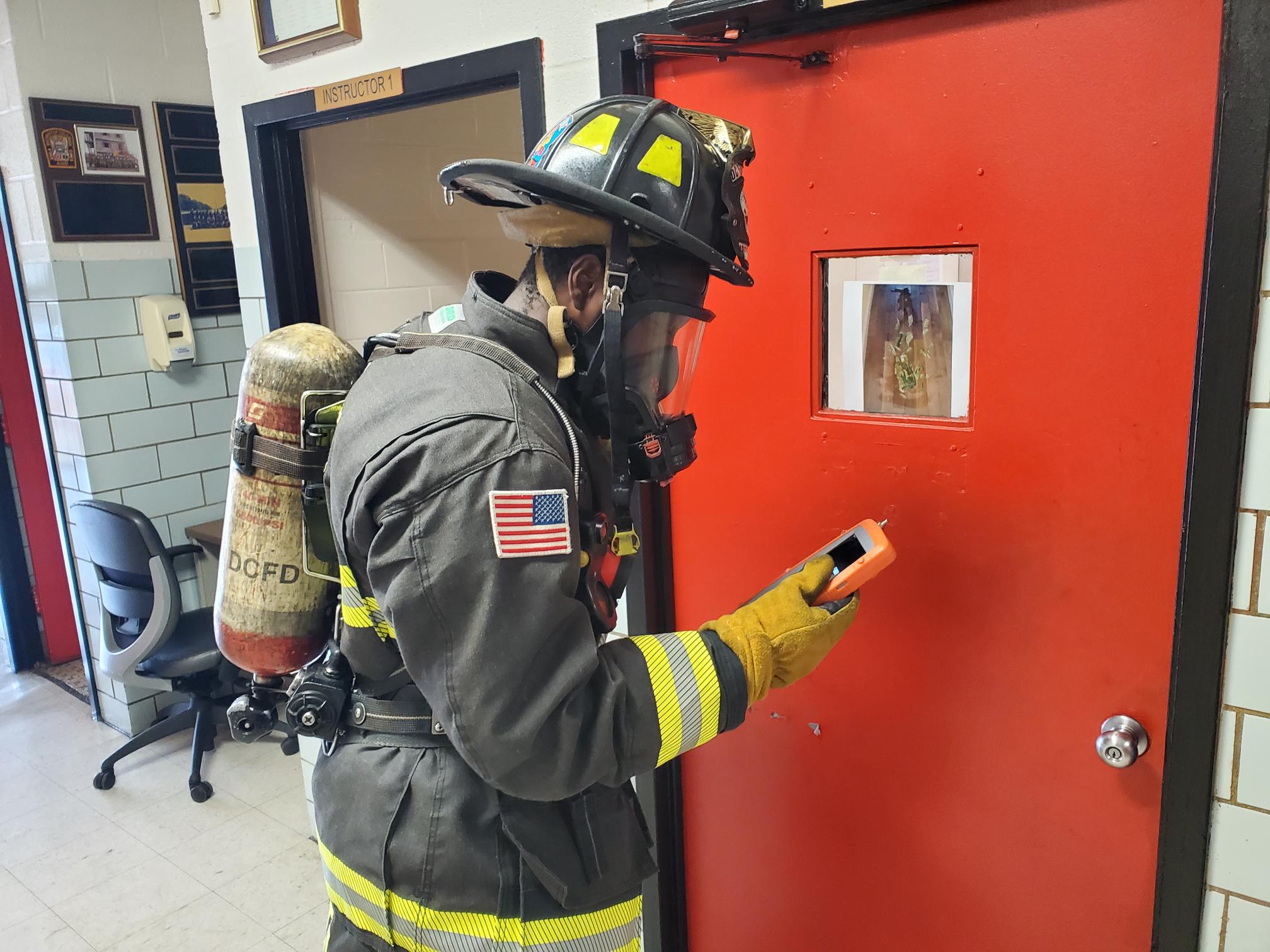
The math that does work is short, frequent, scenario-based reps run on shift. Fifteen to thirty minutes. One scenario. One meter per firefighter. Decision made. Result observed. Repeat next shift with a different scenario. Over a quarter, every member has put hands on the meter ten or twelve times. Over a year, the muscle memory is real.
This is also where the training officer’s life gets easier, not harder. You stop needing to clear a whole shift for an all-day training. You start running fifteen-minute reps the way you run hose stretches — on shift, in quarters, into the rhythm of the job.
Step 5: Document like your AHJ is going to ask
Because they are.
For every firefighter, for every JPR they need to demonstrate, you need: the date, the scenario, the meter used, the evaluator, the outcome, and the sign-off. That documentation lives somewhere your AHJ can pull it on demand — a learning management system, a training records database, even a structured shared drive.
If you are documenting on paper sign-in sheets, you have a problem. If you are documenting nothing because your current training is “awareness,” you have a bigger one.
NFPA 1010 turned gas detection competency into a documentable, defensible record. The good news is the same record makes your next AFG, HMEP, UASI, or Firehouse Subs application stronger — funders are now reading applications looking for exactly this language.
Step 6: Make the chief look good
Here is the part nobody writes down. Training officers don’t get promoted for buying the best meter. They get promoted for being able to walk into the chief’s office and say: “Every firefighter in this department has documented competency on JPR 6.3.21. Here is the record. We are 1010-aligned. We are AFG-ready. We can defend this in a deposition.”
That is the deliverable. The meter is the tool. The reps are the work. The documented record is the deliverable. Get all three right and you have done your job.
What this looks like with HazSim

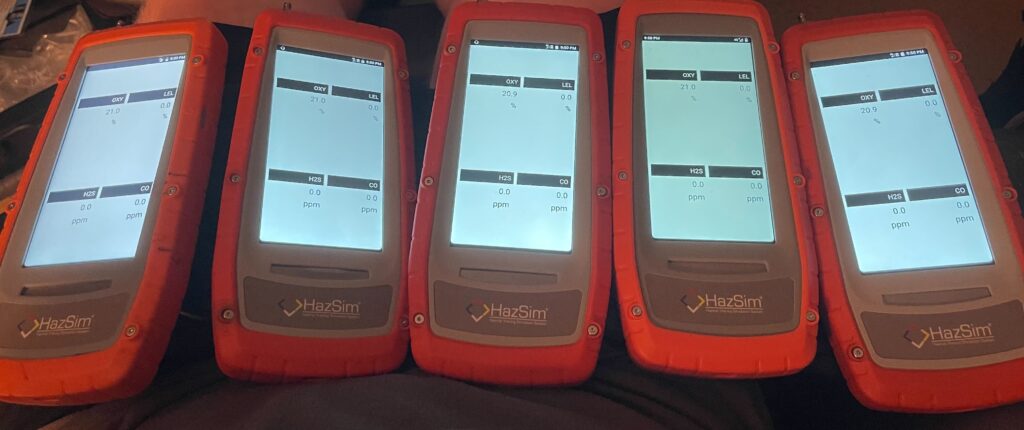
I am not pretending this article is neutral. We built HazSim to make this exact playbook run. Every firefighter holds the same real meter they carry on the call. The atmosphere is driven by an instructor on a tablet. The readings change based on what the firefighter does. The scenario library is mapped to the JPRs. The records come out the back end mapped to 6.3.21.
But I am also not pretending HazSim is the only path. The point of this article is the playbook, not the product. If you can run reps with real product on a real call once a week, do that. If you can build your own changing-atmosphere rig in your training tower, do that. The methodology is what 1010 is asking for. Not our brand.
What 1010 is not asking for, and never will, is a once-a-year PowerPoint and a sign-in sheet.
The bottom line
The standard caught up. The training methodology has been running in fire stations across this country since 2013. Now it is on every training officer’s desk to make competency the record, not the slogan.
Train like the call is coming. Because it is.
Phil Ambrose is the founder of HazSim and the publisher of Hazmat Nation. He spent 31 years in the fire service, retiring as a battalion chief. HazSim is firefighter-owned and has trained more than 10,000 responders across 500+ agencies worldwide. Last week’s article — “Training Was Always the Answer” — sets out the origin of the methodology described above.
Want a 90-day NFPA 1010 6.3.21 implementation outline tailored to your department size? Reply to this newsletter or request a demo — we’ll send the worksheet.